Merkle Trees: What are these?
Make blockchains more effective and reliable. They maintain security and at the same time preserve the operating power and memory.
If you want to discover the secret behind the operation of blockchains make sure you read this article. We will start with the roots that are basic infrastructure and nothing is more basic compared to Merkle Trees. So let’s explore them.
The issue
To understand the need for Merkle Trees we have to look at the issue. When we are working on centralized networks the organization of data in an efficient manner is no trouble at all because in this type of network there is a single centralized entity that requires only one copy and customers, in general, believe in the validity of data. In the case of a decentralized network, the same type of organization can be troublesome as there are many nodes that need a data copy at any time. And this becomes an issue especially because of the users who need to confirm the truthfulness of the received information. So this is where Merkle Trees can make a difference.
What do we understand under Merkle Trees?
Merkle Trees make blockchains reliable as well as more efficient. They achieve to maintain the operating power and keep the memory on a higher level by efficient data organization and thus ensuring data security. The logical question that appears here is how is security achieved? We give you the answer below. Make sure you continue reading!
Hash functions
One of the basic elements in the Trees, as well as cryptography, is hashing. What is hashing and what does it do? Hashing is a procedure of converting an input into a fixed-sized string of text that might consist of numbers and letters. We know the authentic string under the name hash. If the input length is altered the output of the hash shall change dramatically too. When we are discussing the cryptographic function we must mention it is only in one-way, meaning that you can only input info but not get it out. In order to implement the data organization and verification Merkle Trees use as parameters the above-mentioned features.
Merkle Trees organization
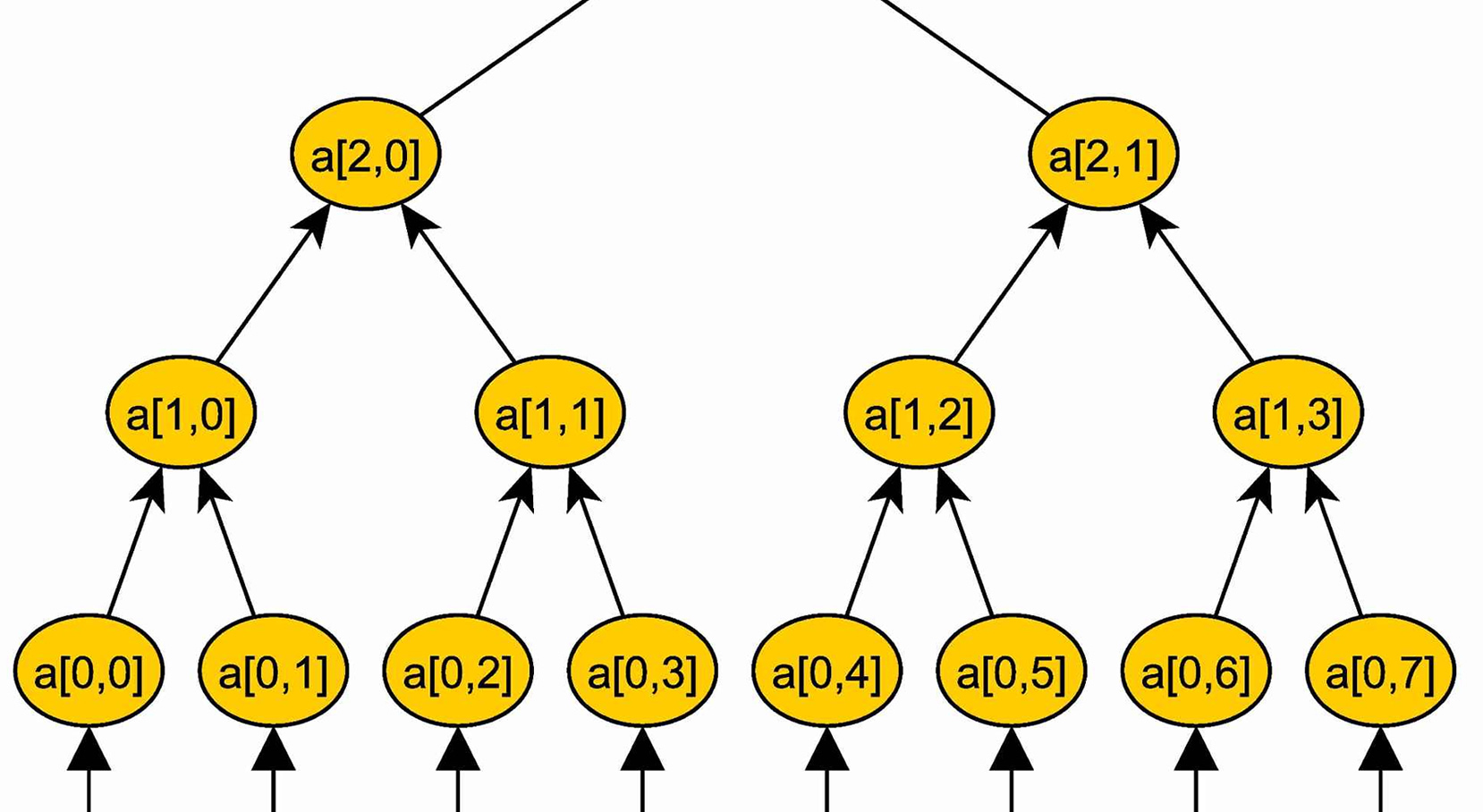
Merkle Trees ensure that blockchains are extra scalable by dividing data in various items. In the most fundamental form, Merkle Trees resembles Christmas trees. Each branch is like a parent that has two nodes. The two child-like nodes’s hash creates one parent node’s hash. The hashing goes throughout the entire tree and reaches the top where there is “root” hash. Regardless, of the data quantity you input into the Merkle Tree it will constantly finish at the top in a form of root hashes.
The manner of operation
Within the Merkle Trees, the information for instance transactions between company accounts and in contracts are hashed and converted in a string involving letters and figures. The hash is combined with the neighboring data hash that belongs to the same tree. This new hash that is a mix of two nodes is called a parent. This hashing process occurs throughout the length of the tree.
As we already mentioned if we change the input parts this would reflect significantly the output. In relation to this, the altering of the data in Merkle Trees alters the hash and its parent node so at the end a change can be observed in the hash of root. So what the property does is a guarantee that the data in Merkle Trees would not be altered but only researched for validity and certified.
What does Merkle Proofs mean?
A Merkle Tree organize files to be seized afterward in a neat way and if you want to verify the validity of the data you can use Merkle Proofs. A Merkle Proof makes use of the details you are researching and in addition, all the tree ‘branches’ in reference to this will move to the root. When the hashes are continuously in consistency throughout the entire branch up to the root we can consider the information true. Otherwise, when there is a case of non-matching the data need to be changed.
As opposed to the requirement to verify almost all the data in the entire tree, what Merkle Proofs needs is having the right amount of power of computing to check not a very big amount of information to state if the info is correct.
Who is the father of Merkle Trees?
Merkle Trees were invented by Ralph Merkle who also invented the cryptographing hashing and cryptography which is public-key one. He is a reputable scientist and a computer genius. He invented the concept of Merkle Trees in the year of 1987.
Have you heard?
This model alludes to the majority of the essential versions of Binary Merkle Tree where a parent has 2 child nodes, however, it can become significantly more entangled than the one with multi-child nodes for each parent. As Ethereum needs to process exchanges for savvy contracts, it utilizes an increasingly more complicated kind of Merkle Trees, which is titled Patricia.
What is its special value?
Blockchains for instance Ethereum need to process, store, and check the information of approximately 9 million hinders—each containing a huge number of exchanges. Indeed, even a generally straightforward blockchain, for example, Bitcoin has countless blocks and a huge number of exchanges in every block. Thus, a Merkle Tree enables that to occur, without the requirement for immense power of computing.
What are the other differences?
A Merkle Proof can be utilized in blockchain customers. These projects with less memory-concentration enable individuals to take part in the blockchain with no expectations to download each exchange and every one of the information from each block. Light customers essentially need to understand the root hash in context to individual block and at that point utilize Merkle Proofs for checking data when required.
The Future
Ethereum as a blockchain is not so easily adaptable to Merkle Trees and thus this principal cryptographic instrument isn’t going to be replaced or kicked out at any point in the near future. Regardless of how huge the trees will grow, it will consistently require its underlying foundations.